
Using Hazard Classification to Build a High-Value EHS Client Portfolio
High-hazard manufacturers are the most valuable target segment for EHS consultancies — they are legally compelled buyers with high contract value. Here's how to identify them and convert them into clients through a systematic outbound strategy.

Why Hazard-Class Targeting Works Differently
Most B2B sales starts with need creation: you find a prospect, make them aware of a problem, present your solution, and persuade them to act. Building an EHS consultancy client portfolio flips that equation entirely. For high-hazard and very-high-hazard workplaces, engaging a qualified safety consultant or occupational health service is not optional — it is a regulatory requirement. The need already exists. The decision has already been made. The only open question is which provider they will work with.
Take that difference seriously and your entire targeting strategy changes. You are no longer trying to convince anyone they have a problem. You are positioning yourself to be the obvious choice when they are ready to act — or when their current arrangement comes up for renewal. Those are very different sales motions, and the second one requires dramatically less energy for every deal closed.
How the Hazard Classification Filter Works
Occupational health and safety regulations in most jurisdictions — OSHA in the United States, the Health and Safety at Work Act and Management of Health and Safety at Work Regulations in the United Kingdom, and the EU Framework Directive 89/391/EEC across Europe — share a common structural logic: the more hazardous the work environment, the more intensive and formal the safety management obligation. High-hazard industries must maintain qualified safety officers and occupational health professionals at mandated minimum hours. Very-high-hazard sites face the highest thresholds — and therefore the highest monthly service fees.
From a pure sales perspective: a very-high-hazard workplace equals a compelled buyer with a high unit value. Both conditions holding simultaneously defines an ideal customer profile. The irony is that many EHS consultancies still try to reach everyone — including low-risk offices and small retail units — diluting their prospecting effort and dragging down conversion rates. The industries that concentrate very-high and high-hazard sites are well-known: metal fabrication and foundries, chemical and petrochemical processing, plastics and rubber manufacturing, construction materials production, textile and apparel factories, food and beverage processing plants, timber and furniture manufacturing, and electrical/electronics assembly. These operations tend to cluster in industrial parks and manufacturing districts — which means systematic outreach is entirely feasible.
How to Reach These Businesses
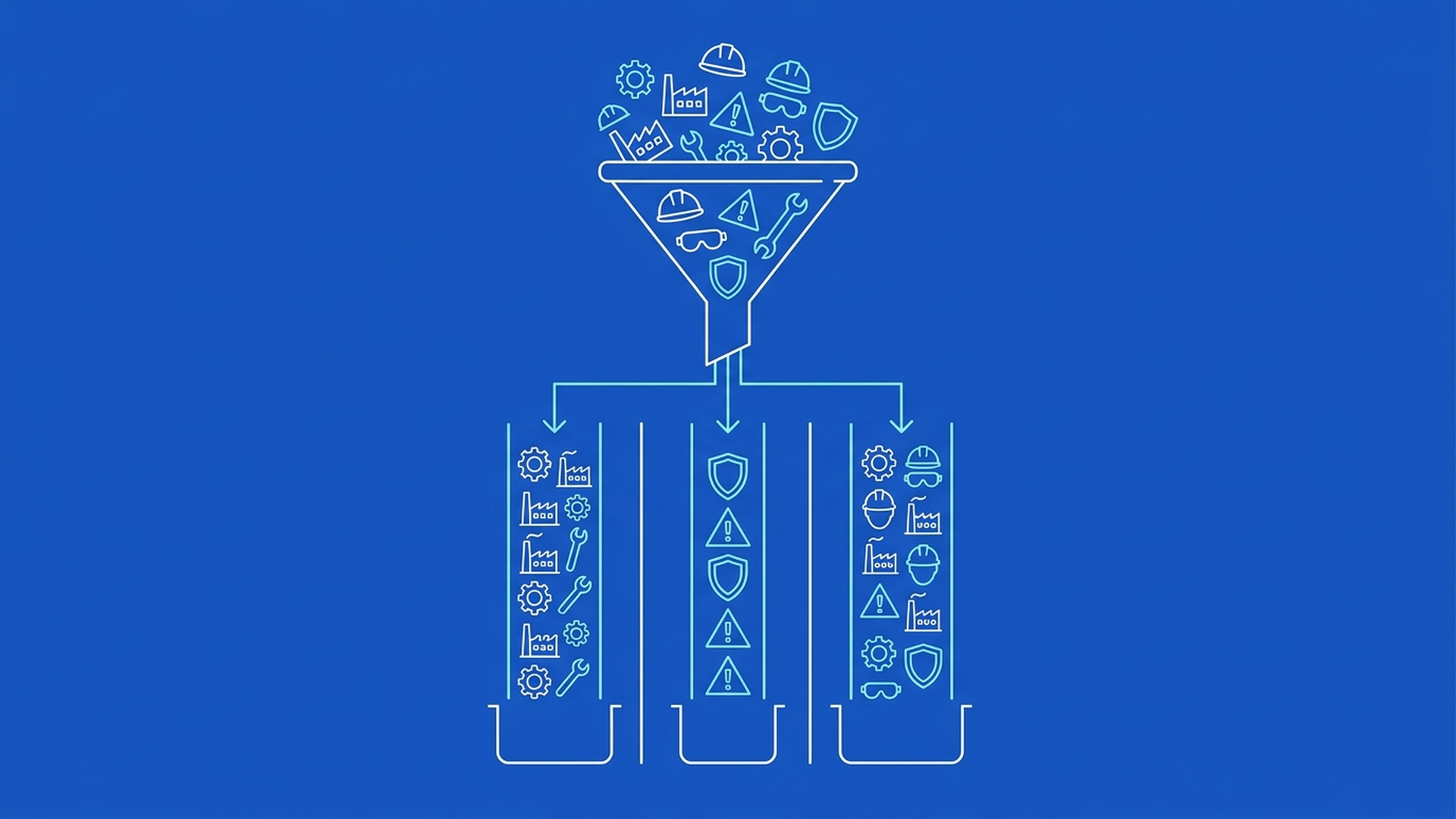
A Google Maps industrial district search is the most direct starting point. Queries like "[city] metal fabrication plant" or "[industrial park name] manufacturing facility" surface businesses that either have no EHS provider yet or whose existing contract is approaching renewal. There is an important distinction worth noting: LinkedIn and trade association directories will give you a company name, but working through to the right decision-maker can take weeks. A Maps-based search gives you the business's phone number, website, and sector in one pass — from there, email-finding tools like Hunter.io let you reach the relevant contact directly and quickly.
Timing matters in outbound outreach. EHS service contracts are commonly annual and tend to align with the calendar or fiscal year. The final quarter of the year — October through December — is when renewal decisions concentrate, and budget has typically been allocated. Arriving in a decision-maker's inbox during that window is both timely and contextually appropriate. For the rest of the year, newly opened facilities and businesses undergoing headcount growth are your primary targets: regulatory thresholds often change when employee numbers cross key brackets, triggering a fresh compliance obligation.
When it comes to email content, replace generic service introductions with sector-specific compliance framing. An opening like "Are your mandatory safety officer hours for a high-hazard chemical processing site currently being met?" does two things simultaneously: it educates the reader on their specific obligation and it creates relevance in a single sentence. Compare that to a generic "We provide EHS consulting services" opener — the reply rate difference is significant and consistent.
Keeping the Portfolio Systematic
Building an EHS consultancy client portfolio is not a one-time campaign — it is a continuous process. Periodic scanning of industrial zones district by district, structured follow-up sequences, and re-queuing businesses that responded with "not right now" after three or four months — all of this becomes unmanageable quickly for small teams when handled manually.
This is where a tool like LeaderMix brings the whole workflow into a single flow: Maps-based prospecting, email discovery, bulk personalised outreach, and automated follow-up reminders. Applied to the EHS use case specifically: you scan high-hazard industrial clusters, send personalised emails to the companies surfaced, and the system handles re-contact for non-responders automatically — freeing you to spend time on proposals and discovery calls rather than list maintenance. All data is handled in accordance with GDPR and equivalent privacy regulations, with built-in opt-out management on every message sent.
A Concrete Starting Point
Here is one action you can take this week: search a nearby industrial park or manufacturing district on Google Maps, collect the first 20 to 30 businesses, and filter down to metal, chemical, plastics, and food processing operations only. That list is the core target group for your EHS consultancy client portfolio. Getting to their email and phone from there is a tooling question — but constructing the list in the first place is a strategic decision. Without making it, no tool will help you.
Soğuk listeyle uğraşmayı bırak.
Google Maps + AI seninle çalışsın. İlk 50 lead 5 dakikada hazır.
Planları İncele →